





What does October 17th represent for Haiti?
Why is October 17th etched in the hearts of Haitians? The brutal assassination of Jean-Jacques Dessalines reveals the dark secrets of the young republic. The story you need to know.
Music plays a crucial role in shaping the identity of a nation; in Haiti, it occupies a central place in the lives of almost all Haitians. It is used as one of the most reliable means used by the Haitian people to escape from the many events that constitute the majority of their daily lives. The musical genre that predominates in Haïti is direct compass. Created by the Haitian creative spirit, the compass evolved over the years to reach its current position. Today we can say with certainty that it is a musical genre that transcends generations and borders, becoming a symbol of pride and an inspiring sign for Haitians around the world.
Sandra Dessalines is a self-taught Haitian painter, sculptor, and visual artist. She was born in Port-au-Prince but grew up in the commune of Carrefour. Today, she is an ambassador who brings Haitian culture to life through her art all over the world, particularly in France, where she has lived for more than a decade. An Honorable Journey Sandra Dessalines trained as an agricultural engineer at Quisqueya University in Port-au-Prince and continued her studies at INSA in Toulouse, France. Her official entry into the world of art came after the devastating earthquake that ravaged her homeland, Haiti, on January 12, 2010. This event pushed her towards art, allowing her to reach the level she occupies today. In terms of recognition, Sandra Dessalines has made a name for herself, with her original style, inspired by her native Haiti, gaining increasing recognition from major event organizers in Paris. In October 2024, she even received the public prize at Lmh Concept Events Art and Design for their 10th anniversary in Paris. This award perfectly reflects the originality of her work and her ability to touch people’s hearts through her creation.
This Thursday, November 14, 2024, the young slam artist Youven Beaubrun, Beven by his stage name, qualified Haiti, for the very first time in its history, for the final of the Slam World Cup. This competition, which brings together the best slam artists on the planet, took place on African soil, more precisely in Togo. In a country held by the throat, a country that is dying from start to finish, under the dangerous feat of a certain armed part of its youth, Beven’s extraordinary performance in this competition resonates with the echo of a whole piece of the country, in the thirst for beauty. Beven is the symbol of a youth that refuses to give in to the chaos that surrounds the face of its motherland. Art, slam being his field of specialization, is used in the best possible way to make hope resonate. And to continue to believe that a country that made 1804 cannot afford the luxury of sinking so hard in the face of human history. "It is with pride that I advanced in this competition. Especially with the crisis that is going through the country at the moment. My qualification for the final is an eternal sign of hope, which confirms the fact that not everything in this country will end in death," the young slammer told us before going to compete in the final. The final took place on Saturday, November 16, 2024, where Beven had his chance to represent his wounded land well on the doorstep of a world victory, a victory that if it had taken place, would have been initialed in the name of an entire people, in the absolute race against a great chaos that dreams only of suffocating it. Although he failed to win this cup (finishing in sixth place overall), the Haitian slam champion had time to inspire an entire country during his great journey in this competition. This is only a postponement, next time victory will be achieved for sure.
Camp-Perrin, nestled in the South department of Haiti, is one of the most picturesque cities in the Caribbean region. Located just 23 kilometers east of Les Cayes, the country’s third-largest city, Camp-Perrin is a true haven of peace. Its pleasant climate, lush vegetation, and serene atmosphere make it an ideal place for those seeking natural beauty and tranquility. While Port-au-Prince, the capital of Haiti, is often marked by tension and social difficulties, Camp-Perrin stands out for its calm and joyful ambiance, offering a different perspective on life in Haiti. Geographical Location and Proximity to Les Cayes Camp-Perrin is located in the southwest region of the country, about 30 kilometers from Les Cayes, a dynamic urban center that plays a crucial role in trade and economic activities in the southern part of Haiti. Although Les Cayes is the third-largest city in Haiti, Camp-Perrin, as a small rural town, contrasts sharply with the hustle and bustle of the big city. Access to Camp-Perrin is easy via National Road #6, which connects Les Cayes to Jérémie, passing through this small town, a journey of less than an hour by car.
The Haïti Monde Festival is a major cultural event dedicated to promoting Haitian thought, memory, and creativity in the heart of Paris. Led for several years by Haitian intellectual Chadrac Charles and his team, it aims to be a space for expression, transmission, and reflection. In 2025, this fourth edition is organized around a theme that is more relevant than ever: “Repairing the World,” and will take place from June 25 to July 11 in the French capital. Gaël Octavia, winner of the 2025 Goncourt Prize for the short story, will be the guest of honor. Alongside her, other friends of the Haitian cause and powerful voices from the Haitian literary scene will be gathered. Among them: geographer Jean-Marie Théodat, Louis-Philippe Dalembert, Rocé, Mélissa Laveaux, Marie-Yemta Moussanang, Makenzy Orcel, Françoise Vergès, Lyonel Trouillot, Nicolas Idier, Nathania Périclès, Vladimir Delva, Sandra Dessalines, Claude Saturne, Kébert Bastien, Jude Joseph... and many others. A tribute will also be paid to Frankétienne and Anthony Phelps, two giants of Haitian literature who passed away this year.
Local trade in Haiti, while rich in diversity and potential, faces numerous challenges, including the low visibility of local producers and the lack of adequate infrastructure for marketing their products. This includes the massive influx of products from foreign countries, which unfairly overwhelms the small Haitian market with very poor-quality products. It is in this context that Phanord Cabé, CEO of the online media Hebdo24, unveiled his ambitious project, "Mache Ayisyen." It is a digital platform dedicated to the promotion and sale of local Haitian products. Scheduled for launch in April 2025, Mache Ayisyen aims to connect Haitian producers and consumers through an online platform. The objective is clear: to encourage the consumption of local products while providing much-needed visibility to the country’s small businesses. By focusing on the growth of local commerce, this initiative could be a catalyst for boosting the Haitian economy.
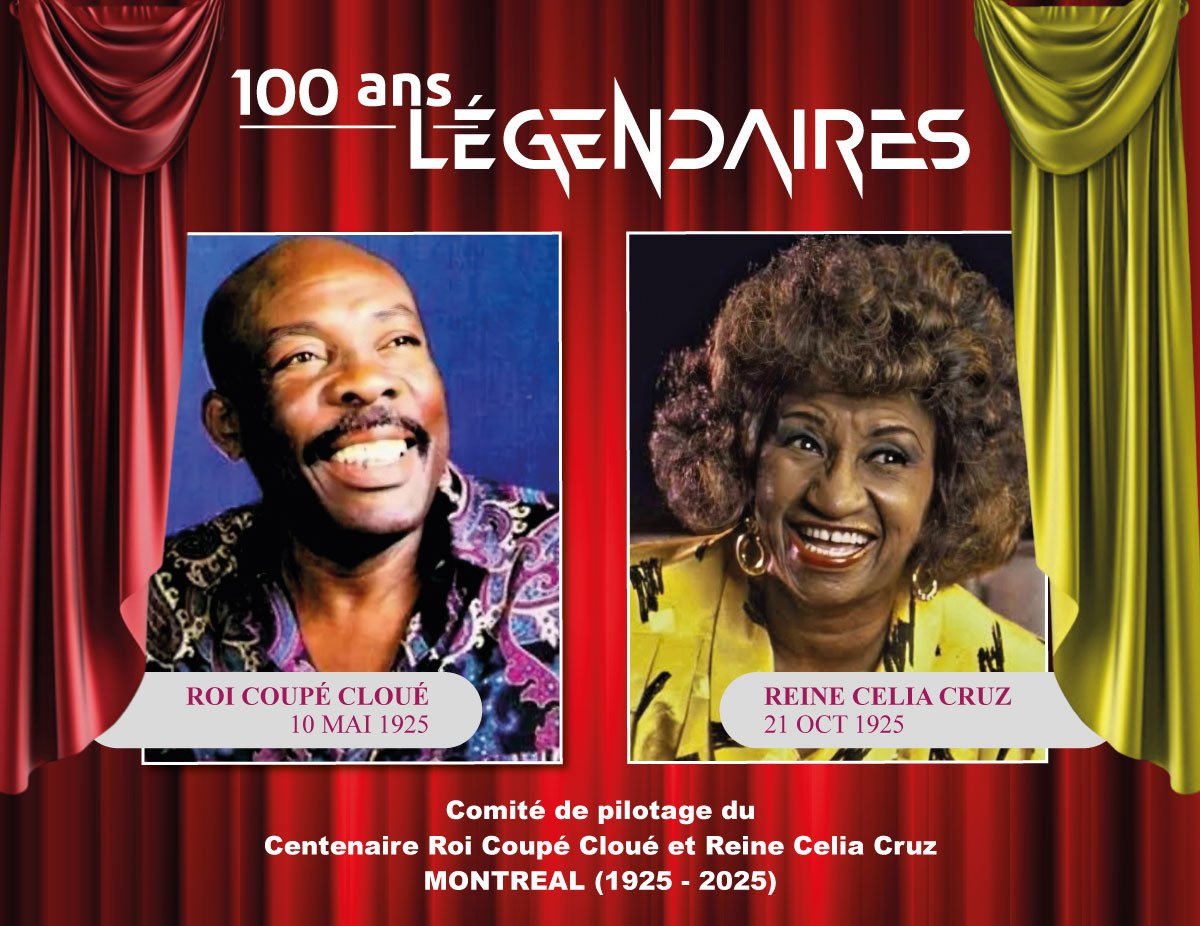
The Légendaires collective, based in Montreal, announces the celebration and commemoration of the 100th anniversary of the births of Coupé Cloué and Celia Cruz, born on May 16th for Coupé Cloué and October 21st for Celia Cruz. This highly deserved gesture of appreciation for these two major figures of Caribbean music is a demonstration of the bright legacy they left behind after their time on this earth. When referring to their contributions to the musical world and the magnificent symbolism their voices represent for their respective countries, this commemoration is indeed an opportunity to celebrate their identity alongside their music. The main events scheduled for this commemoration will take place on February 28th, May 10th, and October 18th. The event on February 28th at the Maison d’Haïti located at #3245, Émile-Journault Avenue will mark the launch of the celebrations honoring both artists. There will also be a Gala on May 10th in honor of King Coupé and October 18th in honor of the Cuban Queen.
Originally from Bainet and raised in Petit-Goâve, Haiti, Emmanuel Joseph embodies one of the rising figures of the Haitian intelligentsia. A jurist, ethicist, and Ph.D. candidate in philosophy at the University of Sherbrooke (Canada), his journey reflects a rigorous commitment to justice, human rights, and critical thinking. Local Roots, Global Outlook Educated in Haiti’s public and religious schools, Emmanuel Joseph began his intellectual path at the Apostolic School of Petit-Goâve, then excelled at the Lycée Faustin Soulouque. His grades, consistently between 8 and 9 out of 10, demonstrated remarkable discipline and rigor from an early age. His university education began at the Faculty of Ethnology (FE) and the Faculty of Law and Economics (FDSE) of the State University of Haiti, where he earned his bachelor’s degree in November 2013. His academic profile sharpened in Canada, especially at the University of Quebec in Rimouski (UQAR), where he completed a master’s degree in philosophy/ethics in 2020, before pursuing a Ph.D. at the University of Sherbrooke, focusing on a broad yet fundamental theme: humanitarian action as experience.
Haïti is a true powerhouse in today’s literary world. For centuries, the country has been endowed with remarkable intellectual wealth that has led to exceptional achievements. Today, with more than 20 major active writers, whose works resonate far beyond Haitian borders, Haïti is one of the countries with the highest number of writers per capita. Among these writers, we can mention Edwige Danticat, Pulitzer Prize winner; Louis-Philippe d’Alambert, Goncourt Prize for Poetry in 2024; René Depestre, Goncourt Prize for Novels in 1982; Dany Laferrière, Renaudot Prize winner and member of the French Academy; Lyonel Trouillot and Frankétienne, globally known for their works; not to forget the current star of Haitian literature, finalist of the 2022 Goncourt Prize with his masterpiece Une somme humaine, referring to Makenzy Orcel. These names stand alongside legendary figures such as Jacques Roumain, Anténor Firmin, Jacques Stéphen Alexis, and Oswald Durant, forming significant marks on world culture through their writings. Today, this literary tradition continues to nourish new talents, but one problem persists: the absence of serious and well-structured Haitian publishing houses in sufficient quantity to support these young authors.
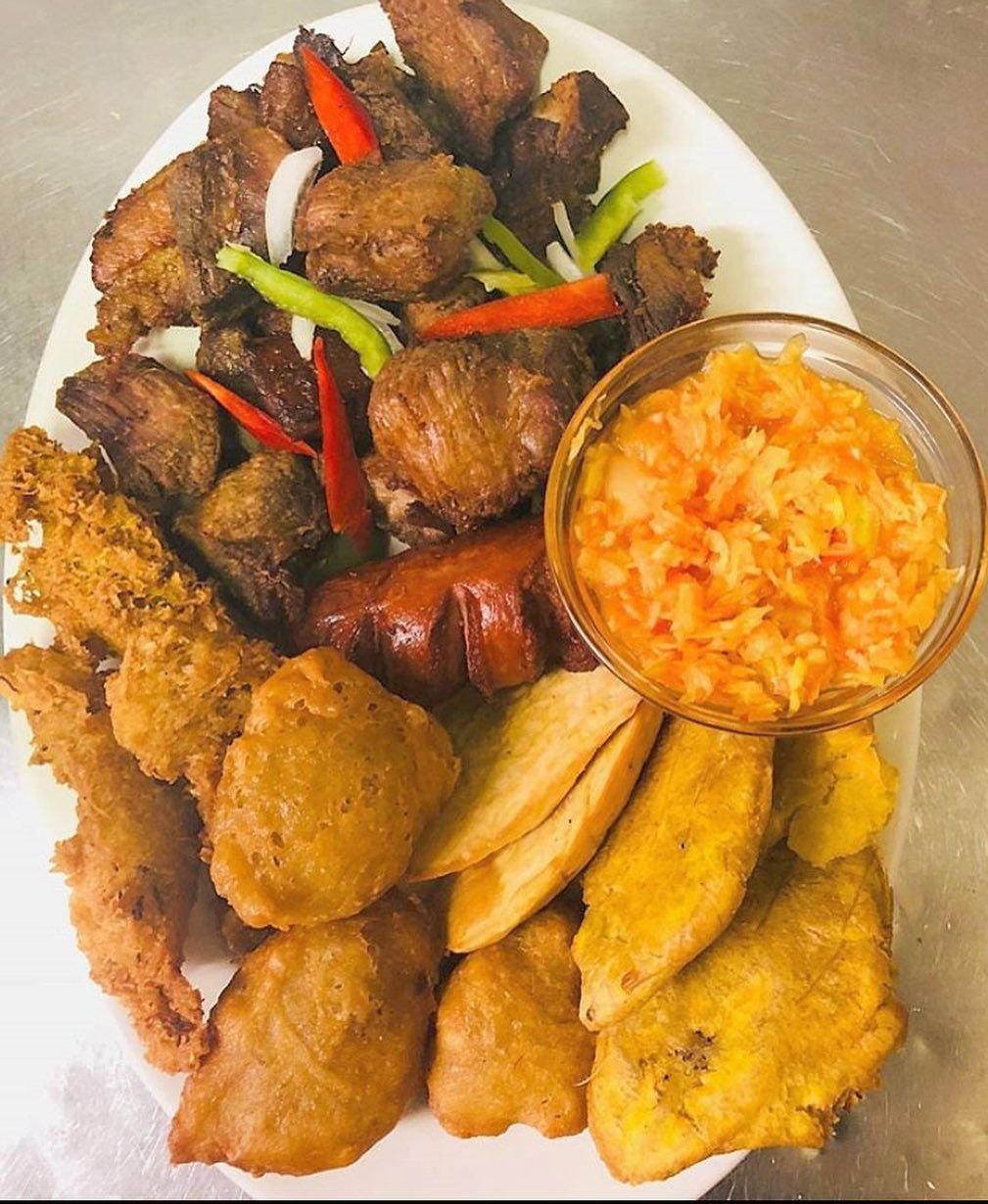
Haiti’s bustling streets often echo with the tantalizing murmur of street vendors selling one of the country’s most prized culinary marvels: Fritay. This street feast, with its mouth-watering fried foods, is a true celebration of Haitian cuisine.
Haiti, often nicknamed "the pearl of the Antilles", is a fascinating destination for travelers in search of authenticity. This Caribbean island country offers a unique combination of natural beauty, an exceptional historical heritage, and a vibrant culture.
Once a staple in Haitian homes, pea broth was a true culinary tradition, served almost every Saturday. This nourishing and comforting dish brought families together around the table, offering an explosion of flavors and essential nutritional intake. However, with changing eating habits and the growing influence of fast food, it is prepared less and less by the new generation, at the risk of falling into oblivion. Haitian pea broth is a thick soup prepared with red or black peas, simmered for a long time until they obtain a velvety texture. This broth is then seasoned with local spices such as garlic, thyme, parsley and cloves, then garnished with vegetables such as carrots and spinach. Some variations add pieces of meat, often beef or pork, and small dumplings called "dombrés" "bòy", which give it even more consistency. So why not revive this tradition and prepare a good pea broth this Saturday, like our grandparents did?
Haiti, this vibrant and characterful country, is located in a fascinating region of the world. Although many know it as an island state in the Caribbean, one question often comes up: in which continent is Haïti located? This article provides you with the answer while exploring the unique geographical and cultural identity of this jewel of the Antilles.
When was the last time you enjoyed a good lalo? Were you satisfied? What particularly struck you: the taste, the company of good friends? Tell us all about it in the comments! Lalo is an iconic dish from northern Haiti, particularly popular in the Artibonite region. It is prepared with jute leaves, a green plant with multiple health benefits. Rich in iron, vitamins, and fiber, lalo is known to give strength and energy. At home, we often cook it with beef, crab, or shrimp, served with white rice and a spicy sauce. Its slightly sticky texture may be surprising, but its savory flavor and spices make it a comforting dish that everyone enjoys. Beyond its flavor, lalo holds a special place in Haitian culture: it’s often prepared at large family gatherings or on holidays, bringing together young and old alike around a delicious meal. So, are you ready to savor a delicious lalo to welcome April with a sweet tooth?

First black nation to free itself from slavery and gain independence from France in 1804 and influenced other liberation movements around the world, inspiring struggles for freedom and equality.

Haïti is blessed with spectacular natural landscapes, including white sand beaches, mountains and rich biodiversity.

Haïti has a rich historical heritage, including sites like the Citadelle Laferrière and the Sans-Souci Palace, listed as UNESCO World Heritage Sites.

Haïti has a rich and diverse culture, influenced by African, European and indigenous elements. Haitian music, dance, art and cuisine are celebrated around the world.